Backing Winners Can Still Leave You Broke
Picking winners sounds like success, but if your prices are too short, you'll lose money over time. This guide explains the break-even strike rate you need at different odds, and why value matters more than accuracy when building a profitable betting record.
By Puntrr Editorial
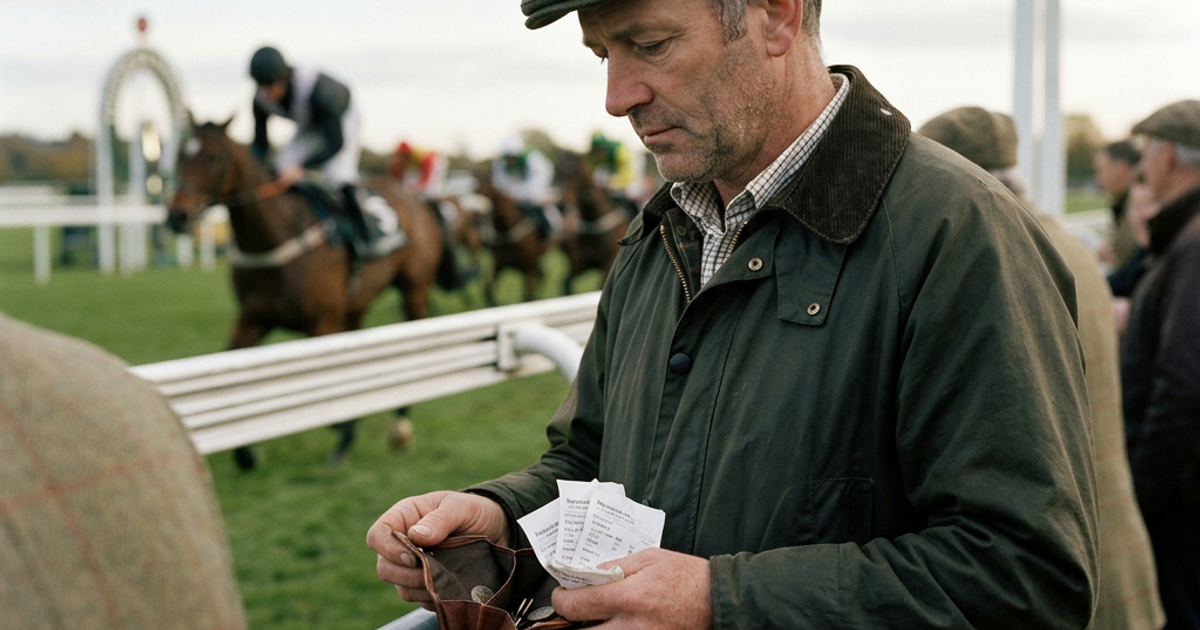
You can back winners all day and still end up skint. That's not a paradox—it's arithmetic. If you're betting horses at 2/1 and hitting 25% of them, you're finding winners but losing money. Understanding the relationship between odds, strike rate and profit is the single most important concept in racing punting.
The reason most losing punters stay losing isn't that they can't pick winners. It's that they accept prices that don't pay them enough when those winners arrive. This guide walks through the break-even mathematics using real decimal odds calculations, so you can see exactly what strike rate you need to break even at any price—and why value, not selection skill alone, determines long-term profit.
What Break-Even Strike Rate Actually Means
Break-even strike rate is the percentage of bets you must win at a given price just to get your money back over time. Win less often than that, you lose. Win at exactly that rate, you tread water. Win more often, you profit.
The formula is simple. Convert fractional odds to decimal, then divide 1 by the decimal price and multiply by 100 to get the percentage.
Break-even % = (1 ÷ decimal odds) × 100
Let's work through a concrete example. A horse is priced at 3/1. In decimal terms, that's 4.0 (you get £4 back for every £1 staked, including your stake).
Break-even = (1 ÷ 4.0) × 100 = 25%
This means if you back ten horses at 3/1, you need to win 2.5 of them on average—realistically three out of ten—just to break even. Win two, you're down. Win four, you're ahead.
Here's a worked example with real money. Say you place ten £10 bets at 3/1 (4.0 decimal). Total staked: £100.
- If you win exactly 2.5 bets (the break-even rate of 25%), your returns are 2.5 × £40 = £100. You're level.
- If you win 2 bets, returns are 2 × £40 = £80. You've lost £20.
- If you win 3 bets, returns are 3 × £40 = £120. You've made £20 profit.
Same selections, different outcomes—but the mathematics shows you need to beat 25% to make money at 3/1. Anything less and you're a long-term loser, no matter how many individual winners you celebrate.
Break-Even Tables Across Common Odds
Different prices demand different strike rates. Shorter odds require higher accuracy; longer odds allow you to lose more often and still profit—if you can find genuine value.
| Fractional Odds | Decimal Odds | Break-Even % |
|---|---|---|
| 1/2 (odds-on) | 1.50 | 66.7% |
| Evens | 2.00 | 50.0% |
| 6/4 | 2.50 | 40.0% |
| 2/1 | 3.00 | 33.3% |
| 3/1 | 4.00 | 25.0% |
| 4/1 | 5.00 | 20.0% |
| 9/1 | 10.00 | 10.0% |
| 19/1 | 20.00 | 5.0% |
Notice how the break-even percentage drops as odds lengthen. At 9/1, you only need to win one in ten bets to break even. At 1/2, you need to win two out of every three. The longer the price, the more losing bets you can absorb—but only if those prices genuinely reflect the horse's chance.
Here's a critical insight: if you back ten horses at evens (2.0 decimal) and win five, you break exactly even. But if you back ten horses at 2/1 (3.0) and win five, you make a significant profit. Same strike rate, different prices, completely different outcomes.
This is why punters who chase short-priced favourites often lose. They might hit 40% winners, but if they're consistently taking 6/4 or shorter, they need 40% just to stay level. There's no edge, no margin for error, and the bookmaker's overround (the built-in profit margin across all outcomes) grinds them down.
Why Value Beats Accuracy Every Time
A profitable punter is not someone who picks the most winners. It's someone who consistently backs horses at prices greater than their true chance of winning. That difference between the price offered and the fair price is called value.
Imagine two punters over 100 bets, each staking £10 per selection:
Punter A: Backs 100 horses at an average of 2/1 (3.0 decimal). Wins 40 of them. Strike rate: 40%.
- Total staked: £1,000
- Total returned: 40 × £30 = £1,200
- Profit: £200 (20% ROI)
Punter B: Backs 100 horses at an average of 6/4 (2.50 decimal). Wins 50 of them. Strike rate: 50%.
- Total staked: £1,000
- Total returned: 50 × £25 = £1,250
- Profit: £250 (25% ROI)
Punter A found fewer winners but made serious profit because the prices were longer than the break-even rate of 33.3% required at 2/1. Punter B found more winners but needed 40% to break even at 6/4—they exceeded it, but only just, and with a smaller margin of safety.
Now consider Punter C: Backs 100 horses at evens (2.0). Wins 48. Strike rate: 48%.
- Total staked: £1,000
- Total returned: 48 × £20 = £960
- Loss: -£40 (-4% ROI)
Punter C picked winners at a 48% clip—higher than most punters will ever achieve—but still lost money because evens requires a 50% strike rate to break even. Close, but no profit. This is the trap of short prices: you can be good and still lose.
The Overround: Why the Market Starts Against You
Even if you could perfectly predict outcomes, you'd still lose backing every horse at bookmaker prices because of the overround. The overround is the built-in margin that ensures bookmakers profit regardless of the result.
In a perfectly fair market, the break-even percentages across all horses in a race would add up to exactly 100%. In reality, they add up to 110%, 115%, sometimes 120% or more. That extra percentage is the bookmaker's edge.
If you accept average prices without seeking value, you're fighting uphill against that overround. The only way to overcome it is to consistently find prices that are longer than the horse's true probability of winning—prices the market has got wrong.
This means your job as a punter is not to find winners. It's to find horses whose odds imply a lower chance of winning than you believe they truly have. A horse might be 4/1 (implying a 20% chance), but if your analysis suggests it has a 28% chance, that's value. Over time, exploiting that gap is what creates profit.
Practical Checklist: Are You Betting Value or Just Picking Winners?
Use this checklist before placing your next bet to ensure you're seeking value, not just backing horses you think might win:
- Have you calculated the break-even strike rate for the odds you're taking?
- Do you believe this horse's true chance of winning exceeds that percentage?
- Are you keeping records of your bets with odds, strike rate and ROI tracked over time?
- Can you explain why the price is wrong, not just why the horse might win?
- Are you comparing bookmaker odds to your own fair price estimate before betting?
If you can't answer yes to at least four of these, you're likely betting on hope rather than value. And hope, over 500 bets, is expensive.
Hypothetical Long-Run Scenario
Let's imagine a punter who places 500 bets over a year, staking £20 per selection, for a total risk of £10,000. All examples here are hypothetical and for illustration only.
Scenario 1: Average odds 5/2 (3.5 decimal), break-even rate 28.6%. Achieves 32% strike rate (160 winners).
- Returns: 160 × £70 = £11,200
- Profit: £1,200 (12% ROI)
Scenario 2: Average odds 6/4 (2.5 decimal), break-even rate 40%. Achieves 38% strike rate (190 winners).
- Returns: 190 × £50 = £9,500
- Loss: -£500 (-5% ROI)
Same punter, similar-looking strike rates, but Scenario 1 found value and Scenario 2 didn't. The difference isn't picking ability—it's price discipline.
Remember: variance means short-term results will swing wildly. You might hit 40% winners over 50 bets and still lose money, or 15% and make a profit, purely due to luck. The mathematics only reliably express themselves over hundreds of bets. This is why bankroll management and realistic expectations are essential—even value bets lose more often than they win, and only the accumulated edge over time delivers profit.
Affordability and Responsible Betting
All stakes in this guide are hypothetical examples for teaching arithmetic principles. Never bet with money you can't afford to lose, and never chase losses by increasing stakes after a bad run. If betting is affecting your finances, relationships or wellbeing, seek support from BeGambleAware or GamCare immediately.
Written by Puntrr Editorial
More stories